
Why TSLA Stock Keeps Volatile: 7 Key Reasons Investors Watch
Discover the 7 key reasons why TSLA stock remains incredibly volatile. We explain market competition, Elon Musk's impact, margin cuts, and tech valuations.
Updated May 30, 2026
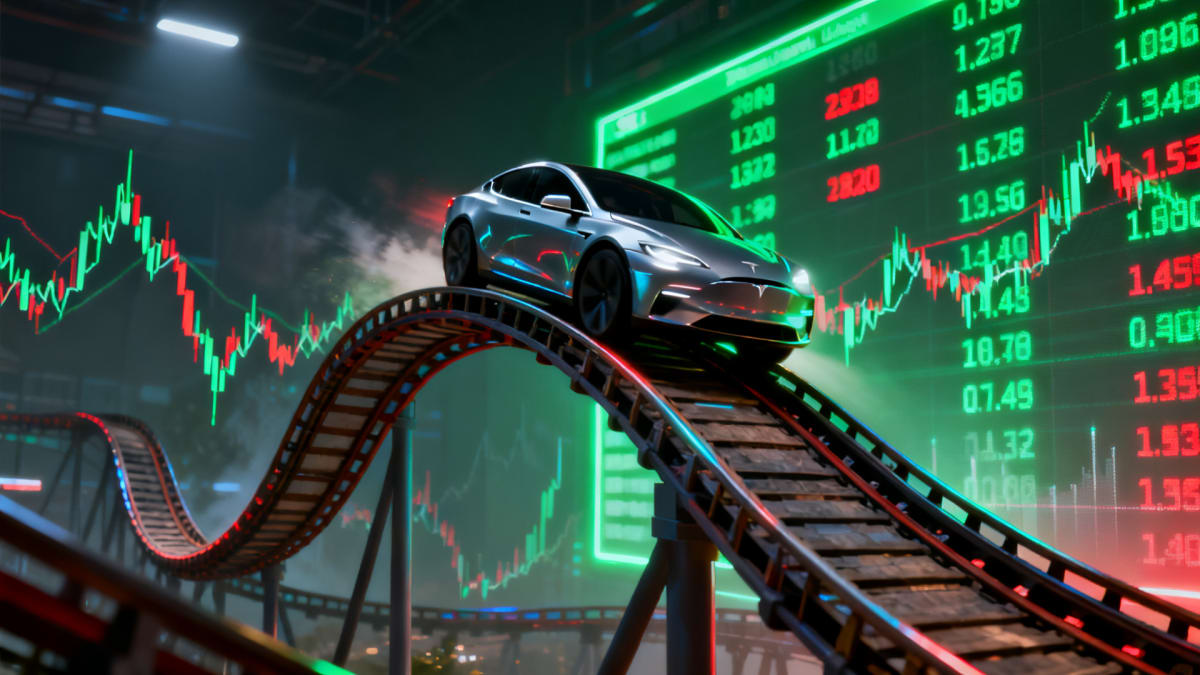
What You Will Learn in This Article
Discover the 7 key reasons why TSLA stock remains incredibly volatile. We explain market competition, Elon Musk's impact, margin cuts, and tech valuations.
How to Get the Most From This Guide
- Read the full article to understand the concept
- Use the linked free calculator to apply what you learn to your own numbers
- Share this article with someone who could benefit from it
TSLA stock is famous for its wild price swings. It routinely experiences massive rallies and sudden crashes. Investors watch these movements closely every single day. This volatility creates both massive risks and big opportunities. Therefore, understanding the underlying drivers is absolutely critical.
If you invest in the market, you must accept uncertainty. However, TSLA stock takes this uncertainty to another level. It rarely trades in a calm or predictable manner. This guide breaks down exactly why this happens. We will explore the seven key reasons behind this extreme market behavior.
Managing your portfolio requires careful attention to these factors. You should always know your baseline financial health. Consider using a net worth calculator to track your assets before buying volatile equities.
Reason 1: Elon Musk and Key Man Risk
Elon Musk is deeply tied to the Tesla brand. He is a visionary leader with massive influence. However, his unpredictable behavior directly impacts TSLA stock. Wall Street calls this phenomenon "key man risk."
Musk uses social media constantly. His public statements move markets instantly. A single tweet can erase billions in market capitalization. Moreover, his political commentary often alienates potential vehicle buyers. Investors hate this level of unpredictability.
Furthermore, Musk runs multiple other companies. He leads SpaceX, Neuralink, and X. Therefore, analysts often worry he is distracted. When he focuses heavily on his other ventures, TSLA stock usually suffers. Shareholders want a CEO focused entirely on automotive and energy growth.
Additionally, Musk holds a massive amount of company shares. He occasionally sells large blocks of stock. When a CEO dumps shares, the market panics. Consequently, retail investors rush to sell their positions too. This creates a vicious cycle of downward momentum.
Reason 2: Intense Global EV Competition
Tesla used to dominate the electric vehicle market completely. They had zero serious rivals for years. However, this monopoly is now over. Competition is fierce and accelerating rapidly. Therefore, TSLA stock reacts violently to competitor news.
Legacy automakers are finally awake. Companies like Ford, General Motors, and Toyota are investing billions. They are building massive battery plants. They are launching compelling electric trucks and SUVs. Moreover, they have established dealership networks. This makes them dangerous rivals.
The biggest threat, however, comes from China. Chinese manufacturers like BYD are producing excellent vehicles. More importantly, they sell them at incredibly low prices. BYD recently surpassed Tesla in total global EV sales. This milestone sent shockwaves through the market.
Investors watch market share data obsessively. If Tesla loses ground in Europe or China, the stock drops. Therefore, the company must constantly innovate to stay ahead. The days of easy growth are definitively over. If you want to dive deeper into future projections, read our Tesla stock forecast 2026.
Reason 3: Macroeconomic Factors and Interest Rates
Cars are expensive purchases. Most consumers finance their vehicles with auto loans. Therefore, macroeconomic factors heavily influence car sales. When the economy struggles, TSLA stock struggles too.
The Federal Reserve controls baseline interest rates. The Federal Reserve website tracks these critical policy shifts. When rates are high, auto loan payments become unaffordable. Consequently, consumer demand for expensive electric cars drops sharply.
Inflation also plays a massive role. High inflation increases the cost of raw materials. Lithium, nickel, and cobalt become very expensive. This raises the cost of building battery packs. However, Tesla cannot always pass these costs to consumers.
When demand drops and costs rise, investors panic. They sell off growth stocks quickly. Therefore, TSLA stock is highly sensitive to monthly inflation reports. A bad consumer price index (CPI) print can trigger a massive sell-off.
Before investing during high inflation, check your cash flow. Utilizing a budget planner helps you manage expenses when costs rise globally.
Reason 4: Quarterly Deliveries and Production Hiccups
Wall Street operates on a strict three-month cycle. Every quarter, analysts predict how many cars Tesla will deliver. TSLA stock lives and dies by these specific delivery numbers.
If Tesla beats expectations, the stock usually surges. Investors view this as proof of strong demand. However, if they miss estimates by even a fraction, the stock crashes. The market is incredibly unforgiving regarding production targets.
Manufacturing cars is incredibly difficult. Supply chain shocks happen frequently. A shortage of microchips can halt an entire factory. Moreover, shipping delays can prevent cars from reaching customers on time. These logistical nightmares ruin quarterly earnings reports.
Tesla operates massive Gigafactories worldwide. Factory shutdowns in Shanghai or Berlin cause immediate panic. Investors worry about lost revenue and idle workers. Therefore, any news regarding factory downtime spikes the stock's volatility instantly.
Reason 5: Regulatory Scrutiny and Safety Probes
The automotive industry is heavily regulated. Safety is the top priority for government agencies. Tesla often pushes the boundaries of new technology. Consequently, they attract intense regulatory scrutiny.
The National Highway Traffic Safety Administration (NHTSA) monitors Tesla closely. You can view public safety data on the NHTSA official site. They frequently investigate crashes involving Autopilot. When the government announces a new probe, TSLA stock drops.
Tesla sells a feature called Full Self-Driving (FSD). However, the software is not fully autonomous yet. Regulators often accuse Tesla of misleading marketing. If a government agency forces a massive recall, the financial damage is huge.
Moreover, environmental regulations impact the company. Tesla earns money by selling regulatory credits to other automakers. If these emission rules change, that revenue stream disappears. Therefore, political shifts create massive uncertainty for shareholders.
Reason 6: Margin Compression and Aggressive Price Cuts
Profitability is crucial for any public company. Gross margin measures how much profit a company makes per car. Historically, Tesla had industry-leading profit margins. This justified a high stock price.
However, recent trends have worried investors. To fight off competitors, Tesla started slashing vehicle prices. They cut prices multiple times across all major markets. This strategy successfully boosted sales volume.
Unfortunately, price cuts destroy profit margins. When cars sell for less, the company makes less money. Consequently, earnings per share decline. Wall Street hates declining earnings. Therefore, institutional investors dump TSLA stock when margins compress.
Bears argue this is a race to the bottom. They believe electric vehicles are becoming basic commodities. If Tesla loses its premium pricing power, its valuation must fall. This ongoing margin debate causes massive daily price swings.
Reason 7: Tech-Stock Valuation Multiples
Valuation is the core reason for TSLA stock volatility. Traditional automakers trade at very low valuation multiples. Companies like Ford might trade at five times their earnings.
Tesla, however, trades like a high-growth technology company. It often trades at fifty or sixty times its earnings. Bulls argue this is entirely justified. They view Tesla as an artificial intelligence and robotics powerhouse.
Because the valuation is so high, perfection is expected. There is no room for error. If a traditional automaker misses an earnings target, the stock drops slightly. If Tesla misses a target, the stock craters. The premium valuation acts like a magnifying glass for bad news.
Furthermore, TSLA stock is heavily traded by retail investors. Retail traders often use leverage and options. This speculative trading amplifies market movements. Therefore, minor news items cause massive price spikes and rapid crashes.
Comparing Volatility: Tesla vs. The Market
To understand this volatility, we must look at the data. Beta is a metric that measures stock volatility against the broader market. A beta of 1.0 means the stock moves with the market. A beta higher than 1.0 means extreme volatility.
| Company Symbol | Industry | Approximate Beta | Volatility Profile |
| TSLA | EV / Tech | 2.30 | Extremely High |
| F (Ford) | Legacy Auto | 1.10 | Average |
| AAPL | Consumer Tech | 1.05 | Average / Stable |
| SPY | S&P 500 Index | 1.00 | Baseline |
Data represents historical averages. TSLA moves more than twice as wildly as the baseline market.
This table highlights why conservative investors avoid TSLA stock. It is not for the faint of heart. The price swings can trigger intense emotional reactions.
How to Manage Your TSLA Stock Investments
Investing in volatile assets requires a disciplined strategy. You cannot trade based on emotion. Panic selling guarantees massive financial losses. Therefore, you must build a logical framework.
First, never invest your emergency cash. You must protect your daily living expenses. Use an emergency fund calculator to secure your safety net first. Only invest capital you can afford to lose.
Second, consider using a systematic purchasing strategy. Do not try to time the market perfectly. It is impossible to predict daily price swings. Instead, use a dollar cost averaging simulator. This method smooths out your purchase price over time.
Third, understand the basics of portfolio theory. Diversification protects you from single-stock crashes. Never put your entire retirement into one company. If you need help balancing assets, review essential investing strategies.
Finally, track your expected long-term gains. Volatility is noise. Long-term compounding is what actually builds wealth. Check your potential future outcomes with an investment return calculator.
The Role of Institutional Short Sellers
We cannot discuss volatility without mentioning short sellers. Short selling is betting that a stock will drop. TSLA stock is historically one of the most shorted stocks globally.
Hedge funds frequently attack the company. They publish negative research reports to scare retail buyers. When bad news hits, short sellers pile in. This accelerates the downward price movement violently.
However, this also creates the potential for short squeezes. If the stock unexpectedly rallies, short sellers must buy shares to cover their bets. This forced buying creates massive, explosive upward rallies. Therefore, the battle between bulls and short sellers guarantees constant volatility.
The Impact of Battery Technology Breakthroughs
Technology shifts also drive wild stock movements. The electric vehicle industry relies entirely on battery chemistry. Currently, lithium-ion batteries dominate the market.
Investors constantly watch for technological breakthroughs. Solid-state batteries are the holy grail. They promise faster charging and longer ranges. Furthermore, they are much safer.
If Tesla announces a major battery breakthrough, the stock rockets upward. Consequently, if a competitor announces a breakthrough first, TSLA stock tanks. The market treats battery technology as a winner-take-all race. The uncertainty surrounding this science keeps traders on edge.
The Energy Storage Business Overlooked
Most people focus solely on cars. However, Tesla operates a massive energy storage business. They build enormous battery packs for the power grid. They also sell solar panels to consumers.
This division is growing incredibly fast. Bulls believe it will eventually rival the automotive business. When Tesla reports strong energy storage deployments, the stock usually responds positively.
Moreover, this business provides recurring revenue. Tesla uses software to manage these power grids. Software revenue carries massive profit margins. Therefore, positive news in the energy sector can suddenly reverse a stock downtrend.
Looking Ahead: The Robotaxi Narrative
The future of TSLA stock hinges on autonomy. Elon Musk promises a fully autonomous Robotaxi network. This service would compete with Uber and Lyft. However, it would lack human drivers entirely.
If Tesla achieves this, the financial rewards are astronomical. Profit margins on software are vastly superior to manufacturing hardware. The stock valuation currently assumes some level of Robotaxi success.
Conversely, if the Robotaxi fails, the stock will correct severely. Bears point out that Tesla has missed autonomy deadlines for years. Regulatory hurdles remain massive. Therefore, every software update release triggers intense market speculation and volatility.
The 2026 Capital Expenditure Shock
In 2026, Tesla announced a massive spending increase. The company expects capital expenditures to top $25 billion. This marks a sharp jump from previous estimates. Most of this money targets artificial intelligence infrastructure. Tesla is buying massive amounts of computing power.
Consequently, Wall Street is incredibly nervous. Heavy spending impacts free cash flow negatively. Analysts at major firms have flagged these cash flow concerns. They predict negative free cash flow for the year. This directly drives stock price volatility downward.
Investors want immediate profits. However, Tesla is investing for a distant future. This disconnect creates massive tension in the market. When cash reserves drop, institutional investors often sell. They prefer companies with predictable, steady cash generation. Therefore, balancing long-term vision with short-term metrics is vital. If you are struggling to balance your own long-term budget, utilize a savings goal tracker.
The Robotaxi Rollout Timeline
The Robotaxi remains a massive catalyst for TSLA stock. In 2026, the company expanded its autonomous vehicle testing. Cities like Austin, Houston, and Dallas are central testing grounds. Tesla hopes to deploy fully autonomous ride-hailing services soon.
However, progress is slower than originally promised. The Cybercab relies entirely on Full Self-Driving software. This software must achieve unsupervised driving capabilities safely. Any delay in software development severely impacts the stock price. Bears argue the technology is not yet safe enough. Bulls believe unsupervised driving is imminent.
Moreover, regulatory approval is a massive hurdle. Each state has different rules for autonomous vehicles. Negotiating with local governments takes considerable time. Therefore, every successful regulatory milestone pushes the stock higher. Conversely, any regulatory pushback causes immediate panic. Investors must watch this specific timeline very closely.
Optimus Gen 3: The Humanoid Robot Factor
Tesla is no longer just a car company. They are heavily investing in robotics. The Optimus humanoid robot is a primary focus in 2026. The company is currently developing the third generation. Musk claims Optimus Gen 3 will learn tasks autonomously.
This robot could revolutionize manufacturing. Tesla plans to deploy Optimus in its own Gigafactories. It could handle repetitive or dangerous tasks efficiently. This would drastically lower labor costs over time. Furthermore, Tesla intends to sell these robots commercially.
If Optimus succeeds, the financial upside is practically limitless. Many analysts factor this potential into the stock valuation. Therefore, any news regarding Optimus updates triggers massive volatility. However, skepticism remains very high. The transition from factory prototype to commercial product is difficult. Any perceived failure in robotics will punish the stock price heavily.
The Brutal China Market Battleground
China is the most important electric vehicle market globally. However, Tesla is facing unprecedented challenges there. Domestic Chinese brands are incredibly aggressive. Companies like BYD and Xiaomi are capturing massive market share.
In early 2026, Xiaomi's new EV outsold the Model Y significantly. This data shocked Wall Street analysts. Tesla must fight hard to maintain its position. To stimulate demand, they introduced aggressive financing options. For example, they offered zero-interest financing in China.
While this boosts sales, it destroys profit margins. Furthermore, a declining market share in China signals weakness. It proves that Tesla's brand dominance is vulnerable. Consequently, investors dump the stock when Chinese sales data disappoints. If you are financing a car yourself, consider using a debt payoff calculator to manage the burden.
Expanding the Footprint into India
To offset challenges in China, Tesla is looking elsewhere. India represents a massive, untapped consumer base. In mid-2026, Tesla officially launched new models there. The Model Y Premium Rear-Wheel Drive hit the Indian market.
This expansion is incredibly important for future growth. India has a rapidly growing middle class. Furthermore, the government is incentivizing electric vehicle adoption. However, building a brand in a new country is expensive. Tesla must establish retail centers and charging networks from scratch.
Initial sales figures in India will be heavily scrutinized. If Tesla succeeds there, the stock will likely surge. It proves the company can still conquer new territories. Therefore, global geographical expansion remains a massive volatility driver. Investors love new markets with high growth potential.
Cybertruck Scaling and The New Roadster
Vehicle production numbers are always a major focus. In 2026, the Cybertruck finally hit stable production levels. Cheaper, mass-market variants are now reaching customers. This helps boost overall quarterly delivery numbers.
Moreover, Tesla confirmed production of the next-generation Roadster. This high-performance vehicle will be built at Giga Texas. The Roadster acts as a halo car for the brand. It generates massive media attention and consumer excitement.
However, sports cars do not generate massive total profits. They are low-volume products. Wall Street actually prefers mass-market vehicles. Analysts want a cheaper, twenty-five thousand dollar car. Therefore, focusing on the Roadster sometimes frustrates institutional investors. They view it as a distraction from core manufacturing goals. This strategic debate causes friction in the stock price.
The FSD Monthly Subscription Model
Software revenue is the holy grail for Tesla. Initially, Full Self-Driving cost a massive upfront fee. However, Tesla shifted to a monthly subscription model. This lowers the barrier to entry for everyday consumers.
More drivers are trying the software now. If retention rates stay high, recurring revenue will explode. Software carries incredibly high profit margins. This directly boosts the company's bottom line. Therefore, analysts monitor the FSD take-rate obsessively.
When the take-rate rises, the stock valuation justifies itself. However, if consumers cancel their subscriptions, panic ensues. Drivers must feel the software provides real daily value. Otherwise, they will simply drive manually. Recurring revenue is vital for long-term stability. If you want to maximize your personal recurring income, explore the dividend yield calculator.
Understanding Trading Psychology
You cannot ignore human psychology when trading TSLA. The stock is a battleground of intense emotions. Institutional investors hate unpredictability. They build complex models based on rational projections.
Retail investors, however, often trade on pure hype. They love the futuristic vision Elon Musk sells. This creates a massive tug-of-war every single trading day. When hype outweighs logic, the stock rockets upward. When reality hits, it crashes violently.
Furthermore, media coverage amplifies these emotional swings. Positive news goes viral instantly. Negative news spreads just as fast. Therefore, the stock rarely trades sideways. It is always trending sharply in one direction. To survive this, you need strong personal finance fundamentals. Never let stock market stress ruin your daily life.
Institutional Pressure and Short Sellers
We must discuss the dark side of the market. Short sellers actively bet against TSLA stock. They borrow shares and sell them immediately. They hope the price drops so they can buy them back cheaper.
Tesla is historically a highly shorted stock. Hedge funds constantly attack the company's valuation. They publish negative research to scare retail investors. When bad news drops, short sellers accelerate the decline. They pile into the trade aggressively.
However, this creates dangerous short squeezes. If Tesla reports great news, the stock jumps. Short sellers must buy shares rapidly to cut losses. This forced buying triggers massive, explosive upward rallies. Therefore, the stock is trapped in a perpetual financial war.
Energy Storage: The Silent Giant
Everyone focuses entirely on electric cars. However, Tesla Energy is growing at a staggering pace. Megapack and Powerwall installations are breaking records globally. The world desperately needs reliable renewable energy storage.
Grid stability is a massive global issue. Utilities are buying massive battery packs from Tesla. This business segment provides steady, highly predictable revenue. It is the exact opposite of the volatile car business.
Many analysts believe energy storage will stabilize the stock. By 2026, it accounts for a large chunk of total revenue. Therefore, positive earnings from the energy sector can save a bad quarter. Investors should pay close attention to Gigafactory Nevada's output. Battery production constraints are the only thing slowing this division down.
Macroeconomic Shocks and Interest Rates
The broader economy cannot be ignored. Cars are usually purchased with borrowed money. Therefore, interest rates dictate total consumer demand. The Federal Reserve heavily influences TSLA stock.
When rates remain high, auto loans become incredibly expensive. Consequently, middle-class consumers delay purchasing new cars. Tesla must lower prices to compensate for high loan costs. We already know price cuts destroy profit margins.
Furthermore, inflation impacts manufacturing costs directly. High raw material prices squeeze the company from both sides. When the economy struggles, growth stocks get crushed. Before investing in such volatile assets, check your own income stability. Use a paycheck calculator to ensure you have enough disposable income.
Regulatory Battles Over Autonomous Driving
Government regulation is a massive threat to Tesla. Safety regulators are aggressive. They are constantly investigating crashes involving Autopilot. In 2026, the scrutiny remains incredibly intense.
If a regulatory body forces a hardware recall, the costs are massive. Even worse, they could ban unsupervised autonomous driving. This would completely destroy the Robotaxi business model. The stock's premium valuation would collapse instantly.
Therefore, legal battles are closely watched by Wall Street. Tesla must prove their software is safer than human drivers. They share massive amounts of driving data to prove this. However, public perception is fragile. One high-profile accident can ruin years of progress. Regulatory risk is a primary driver of stock volatility.
The Impact of Battery Technology Innovations
Battery technology is the core of the EV industry. Tesla currently relies on lithium-ion cells. However, they are constantly researching new chemistries. Dry cathode manufacturing is a massive focus for 2026.
This process reduces manufacturing costs significantly. If Tesla perfects it, their profit margins will expand massively. Furthermore, solid-state batteries loom on the horizon. Whoever masters solid-state technology will dominate the entire industry.
When Tesla announces a battery breakthrough, the stock surges. Conversely, if a competitor announces a better battery, TSLA drops. The market treats this technology race as a zero-sum game. You must follow scientific developments to understand the stock. The future of transportation is entirely dependent on chemical engineering.
Dealing with Key Man Risk
Elon Musk is undeniably brilliant. However, he is also highly unpredictable. His actions directly impact the stock price daily. He often makes controversial statements publicly.
These statements can alienate potential customers. Furthermore, he runs several massive companies simultaneously. SpaceX requires immense amounts of his time and focus. Investors worry he cannot dedicate enough energy to Tesla.
When Musk focuses heavily on politics or other ventures, TSLA suffers. Shareholders want a CEO focused strictly on operational efficiency. Moreover, Musk holds a massive amount of shares. His personal stock sales cause immediate market panic. This key man risk guarantees extreme volatility for the foreseeable future.
Balancing Your Investment Portfolio
If you want to own TSLA, you must diversify. Putting all your money into one volatile stock is reckless. You need a balanced approach to survive market crashes.
Mix high-growth tech stocks with stable dividend-paying companies. Consider investing in index funds for foundational stability. Furthermore, look into alternative assets. Exploring real estate can provide a solid hedge against stock market chaos.
Volatility is mathematically guaranteed. You must build a portfolio that can withstand violent swings. Evaluate your risk tolerance honestly. If daily price drops ruin your sleep, do not buy TSLA. It is crucial to align your investments with your personal temperament.
Taxes and Long-Term Capital Gains
Trading volatile stocks frequently generates massive tax liabilities. Every time you sell a stock for a profit, you owe taxes. Short-term capital gains are taxed at very high rates.
Therefore, long-term holding is generally a better strategy. If you hold a stock for over a year, tax rates drop significantly. Do not let panic selling create a massive tax bill. Use proper tax planning to keep more of your money. Visit our tax section to understand your obligations better.
Before making major portfolio changes, consult a professional. Tax laws change frequently and vary by region. Smart investors manage their tax burden just as aggressively as their portfolios.
Funding Your Retirement Dreams
Volatile stocks can supercharge your retirement savings. A small position in a high-growth company can yield massive returns. However, it can also wipe out your savings completely.
Never gamble with your retirement timeline. Base your core strategy on safe, predictable assets. Use a retirement savings calculator to map out your long-term goals. TSLA stock should only represent a speculative portion of your wealth.
If the Robotaxi and Optimus programs succeed, the upside is huge. It could drastically shorten your working years. Conversely, if they fail, your baseline retirement should remain safe. Proper asset allocation is the true secret to financial freedom.
Navigating the Consumer Credit Crunch
High interest rates do not just hurt car loans. They hurt all forms of consumer credit. When credit card debt rises, discretionary spending falls. People stop buying luxury items when they are drowning in debt.
Tesla vehicles are still premium products. Therefore, a consumer credit crunch hurts sales volumes. If you are managing your own credit lines, be careful. Review the best credit cards to find lower interest options.
Furthermore, utilize credit loans wisely to consolidate high-interest debt. When consumers are financially healthy, car sales thrive. When they are struggling, automotive stocks suffer across the board. The broader credit market directly influences TSLA stock movements.
Mortgage Rates and Consumer Confidence
Housing costs heavily dictate disposable income. High mortgage rates prevent people from moving. They also stop homeowners from refinancing to cash out equity. This locks up money that could be spent on cars.
When housing is unaffordable, major purchases are delayed. Tesla needs a confident, cash-rich middle class. If you are tracking your housing costs, use a mortgage calculator. Understanding housing trends helps predict broader consumer spending.
When mortgage rates finally drop, consumer confidence will surge. This often creates a massive tailwind for auto sales. Therefore, macroeconomic housing data is unexpectedly linked to TSLA stock performance.
Final Thoughts on Tesla's Market Behavior
TSLA stock will remain volatile for the foreseeable future. The company sits at the intersection of manufacturing, energy, and artificial intelligence. These are highly disruptive industries. Disruption inherently creates market chaos.
The seven factors listed above interact daily. Elon Musk's tweets collide with Federal Reserve policies. Chinese competition battles against Tesla's price cuts. Regulatory probes threaten software revenues. It is a incredibly complex financial ecosystem.
If you choose to invest, you must stay informed. Read quarterly reports carefully. Ignore the daily social media noise. Above all, maintain a long-term perspective. Volatility is the price of admission for high-growth investing. Stay disciplined, use the right financial tools, and stick to your personal investment thesis.
Key Concepts to Remember
- Reason 1: Elon Musk and Key Man Risk
- Reason 2: Intense Global EV Competition
- Reason 3: Macroeconomic Factors and Interest Rates
- Reason 4: Quarterly Deliveries and Production Hiccups
- Reason 5: Regulatory Scrutiny and Safety Probes
Put This Knowledge to Work
Use our free financial calculators to apply what you just learned to your own numbers.
Related Articles
Stock Market Today: What Investors Need to Know This Week
Understand the stock market today with our comprehensive weekly breakdown. We cover the Fed, jobs data, tech stocks, and essential strategies for investors.
QQQ Stock Guide: Best ETF for Tech Investors in 2026?
Discover our comprehensive guide to QQQ stock. We analyze the Nasdaq-100 ETF, top tech holdings like Nvidia, performance history, and investing strategies.
SOFI Stock Prediction: Future of Digital Banking in 2026
Discover our complete SOFI stock prediction for 2026. We analyze SoFi earnings, the Super App strategy, digital banking trends, and future growth catalysts.

Palantir Stock Explained for New Investors in 2026
Discover exactly how Palantir stock works. We explain their AI platforms, government contracts, financial health, and how beginners can invest safely.
Found This Helpful? Share It
Help others make smarter financial decisions by sharing this article.
Or copy the link:
This article is for informational and educational purposes only and does not constitute financial, tax, legal, or investment advice. Always consult a qualified professional for guidance specific to your situation. AssetClip earns revenue through display advertising and affiliate partnerships — see our Advertiser Disclosure for details.