
Tesla Stock Forecast 2026: Expert Bull vs Bear Case
Discover the definitive Tesla stock forecast for 2026. We break down the bull and bear cases, financial metrics, and market trends for smart investors.
Updated May 30, 2026
What You Will Learn in This Article
Discover the definitive Tesla stock forecast for 2026. We break down the bull and bear cases, financial metrics, and market trends for smart investors.
How to Get the Most From This Guide
- Read the full article to understand the concept
- Use the linked free calculator to apply what you learn to your own numbers
- Share this article with someone who could benefit from it
Tesla stock remains a massive focal point for global investors. The year 2026 represents a critical turning point for the company. Wall Street is sharply divided. Some analysts predict unprecedented growth. Others foresee a steep decline. Therefore, understanding both perspectives is vital. This guide provides a comprehensive forecast for Tesla stock in 2026. We will explore market trends, financial metrics, and technological advancements.
Investing in volatile assets requires careful planning. You must weigh the risks and rewards. Moreover, you should align your trades with your financial goals. Consider using a net worth calculator to track your baseline before making major investments.
Macroeconomic Factors Shaping the EV Market
The broader economy heavily impacts Tesla stock. Interest rates dictate auto loan affordability. High rates suppress consumer demand. However, central banks may adjust policies by 2026. Lower interest rates would boost car sales. Furthermore, inflation affects manufacturing costs. Raw materials like lithium and nickel dictate battery prices.
Government policies also play a major role. Subsidies for electric vehicles change frequently. Tax credits drive consumer adoption. Conversely, tariffs on foreign components can hurt margins. Therefore, macroeconomic stability is crucial for Tesla to thrive.
Global energy prices also influence EV demand. High gasoline prices push consumers toward electric cars. However, cheap oil reduces this incentive. Investors must monitor global energy markets closely.
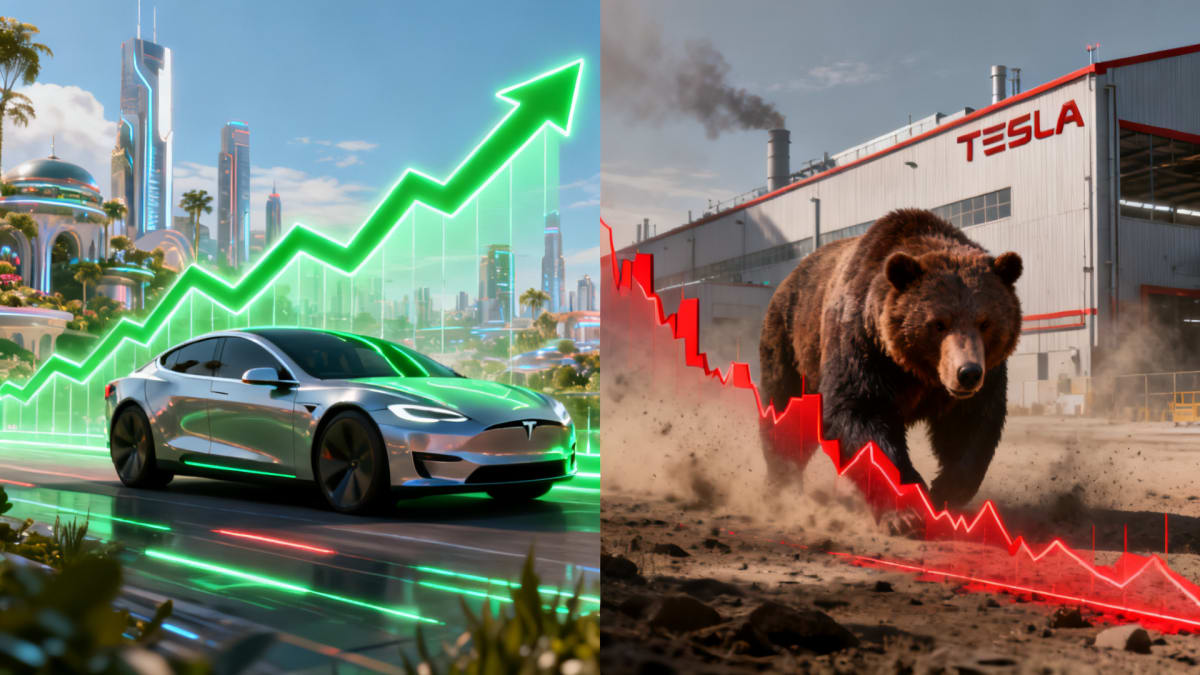
The Bull Case for Tesla Stock
Optimists see massive upside for Tesla stock. They view Tesla as a technology company, not just an automaker. The bull case relies on several key pillars.
First, software revenues are highly profitable. Second, the energy storage business is expanding rapidly. Third, manufacturing innovations lower production costs. Consequently, bulls expect profit margins to expand significantly by 2026.
If you are building a long-term position, consistency is key. Using a dollar cost averaging simulator can help you model consistent investments in Tesla stock over time.
Full Self-Driving and the Robotaxi Network
Full Self-Driving (FSD) is central to the bull thesis. Tesla collects massive amounts of driving data. This data trains their artificial intelligence models. By 2026, bulls expect FSD to reach high autonomy levels.
A fully autonomous software package yields incredibly high margins. Furthermore, Tesla plans to launch a dedicated Robotaxi. This vehicle would lack a steering wheel. It would operate on a ride-hailing network. Owners could rent out their cars autonomously. Therefore, Tesla could capture software-like profit margins from transportation.
Moreover, licensing FSD to other automakers represents pure profit. If major competitors adopt Tesla software, revenue will surge. This software transition justifies a premium valuation for Tesla stock.
The Rise of Tesla Energy
Automotive sales often overshadow Tesla Energy. However, this division is growing exponentially. Megapack deployments are scaling up globally. Utilities use these massive batteries to stabilize the grid.
Renewable energy requires efficient storage solutions. Solar and wind power are intermittent. Therefore, battery storage is essential. Tesla operates large-scale factories dedicated to these products. By 2026, energy storage could account for a large portion of total revenue.
Furthermore, energy software platforms like Autobidder generate recurring income. This diversification reduces reliance on car sales. Consequently, bulls argue the energy business alone justifies a high stock price.
Next-Generation Manufacturing and Robotics
Manufacturing efficiency separates Tesla from legacy automakers. The company utilizes massive die-casting machines. These "Gigapresses" replace hundreds of robot welders. They simplify the assembly line. Therefore, production costs drop significantly.
By 2026, Tesla aims to launch a low-cost vehicle. This "Model 2" targets the mass market. It relies on a revolutionary "unboxed" manufacturing process. This method assembles the car in modular sections. Moreover, it reduces factory footprint and labor costs.
Additionally, the Optimus humanoid robot presents wild upside. Tesla is designing robots for factory labor. If successful, Optimus could solve labor shortages. It could also become a massive commercial product. Bulls factor this potential into their long-term models.
To calculate potential returns on such high-growth tech stocks, investors often use an investment return calculator.
The Bear Case for Tesla Stock
Pessimists view Tesla stock as severely overvalued. They argue Tesla is simply a car company facing intense headwinds. The bear case focuses on competition, margins, and unfulfilled promises.
Valuation is the primary concern for bears. Traditional automakers trade at low earnings multiples. Tesla trades at a massive premium. Therefore, any slowdown in growth could trigger a violent stock correction.
Intensifying Global Competition
Tesla no longer operates in a vacuum. Competition is fierce and accelerating. Traditional automakers have heavily invested in electric vehicles. Companies like Ford, GM, and Volkswagen are ramping up production.
However, the biggest threat comes from China. BYD has emerged as a dominant global force. They produce high-quality EVs at extremely low prices. Furthermore, Chinese brands are expanding into Europe and Latin America.
Tesla must fight to maintain market share. Consequently, they may need to spend more on advertising. Increased marketing budgets eat into profit margins. Bears argue Tesla cannot sustain its early dominance as the market saturates.
Margin Compression and Price Wars
To combat competition, Tesla has slashed vehicle prices. Price cuts stimulate demand but destroy profit margins. Bears argue this is a structural problem, not a temporary blip.
As EVs become mainstream, they become commoditized. Consumers shop based on price and features. Therefore, Tesla loses its premium pricing power. If battery costs do not fall fast enough, margins will stay compressed.
Lower margins directly impact earnings per share. Wall Street values companies based on earnings growth. If earnings stall, the stock price will suffer. Moreover, aggressive price wars hurt the resale value of existing vehicles. This frustrates loyal customers.
Regulatory and Leadership Risks
Tesla faces intense regulatory scrutiny. Government agencies are investigating Autopilot and FSD safety claims. Recalls and software fixes are common. However, severe regulatory crackdowns could halt FSD deployment. This would destroy the Robotaxi narrative.
Furthermore, key person risk is a major factor. Elon Musk is deeply tied to the Tesla brand. He also runs multiple other companies. Bears argue he is distracted. His public controversies occasionally damage the corporate brand. Therefore, any sudden departure or major scandal could severely impact Tesla stock.
Financial Projections for 2026
Projecting exact financials is inherently difficult. However, modeling different scenarios is essential for investors. Below is a hypothetical comparison of the bull and bear cases for 2026.
| Metric | 2023 Actual | 2026 Bull Case | 2026 Bear Case |
| Total Deliveries | 1.8 Million | 3.5 Million | 2.2 Million |
| Total Revenue | $96.7 Billion | $165 Billion | $110 Billion |
| Gross Margin | 18.2% | 22.5% | 14.0% |
| FSD Adoption Rate | ~15% | 35% | 10% |
| Energy Revenue | $6.0 Billion | $20 Billion | $10 Billion |
Note: These figures are estimates based on broad market analysis.
The table highlights the vast difference in expectations. The bull case assumes successful software execution. The bear case assumes a commoditized hardware market.
Valuation Models and Price Targets
Analysts use different models to value Tesla stock. The Price-to-Earnings (P/E) ratio is common. In the bear case, Tesla gets a traditional auto P/E ratio. This might be around 15x earnings. Therefore, the stock price would be quite low.
Conversely, the bull case applies a tech-company multiple. They might assign a 40x or 50x multiple. This assumes high-margin software revenue materializes.
Discounted Cash Flow (DCF) models are also popular. This model estimates future cash flows. It then discounts them to present value. Small changes in growth assumptions drastically alter DCF results. Consequently, Wall Street price targets for 2026 range wildly from very low to extremely high.
How to Manage Investment Risk
Investing in single stocks carries high risk. Tesla is notoriously volatile. Therefore, proper portfolio management is critical. Never invest money you need in the short term.
First, establish a safety net. You should have cash reserves before buying volatile stocks. Use an emergency fund calculator to determine your optimal cash buffer.
Second, diversify your holdings. Do not put your entire portfolio into one sector. Mix technology stocks with index funds. Consider exploring investing basics to build a robust portfolio.
Third, understand the power of long-term holding. Volatility is normal. If you believe the bull case, you must hold through market corrections. A compound interest calculator can show how long-term growth overrides short-term market noise.
The Role of Supply Chain Resilience
A hidden factor for 2026 is supply chain control. Tesla vertically integrates much of its production. They refine their own lithium. They design their own computer chips. This provides a massive advantage over competitors.
During global shortages, vertical integration saves production lines. However, building raw material refineries is expensive. It requires immense capital expenditure. Bears argue this drains cash. Bulls argue it secures the future.
Moreover, geopolitical tensions threaten global supply chains. Tariffs on battery materials could spike costs. Tesla must navigate these global trade waters carefully. Localizing production in Europe, Asia, and North America helps mitigate this risk.
The Impact of Global Charging Infrastructure
Electric vehicle adoption requires robust charging networks. Tesla dominates this space. The Supercharger network is highly reliable. It is a major selling point for the brand.
Recently, other automakers adopted Tesla's charging standard. The North American Charging Standard (NACS) is now dominant. This opens Superchargers to non-Tesla vehicles.
Consequently, Tesla will generate revenue from competitors. Selling electricity and charging services creates recurring revenue. Furthermore, it qualifies Tesla for government infrastructure grants. This infrastructure moat is difficult for competitors to cross.
Evaluating Consumer Sentiment in 2026
Consumer preference changes rapidly. Early EV adopters were tech enthusiasts. They accepted minor flaws for new technology. However, mass-market consumers are less forgiving. They demand perfect reliability and cheap repairs.
Tesla must improve customer service by 2026. Wait times for collision repair are historically long. Insurance premiums for EVs can be high. Therefore, Tesla launched its own insurance product. You can learn about financial protection strategies in our insurance hub.
Improving the ownership experience is vital. If brand loyalty drops, the bear case becomes more likely. Word-of-mouth marketing built the company. It must remain positive to sustain growth.
Software Updates and Recurring Revenue
Legacy vehicles depreciate the moment they are sold. Tesla vehicles improve over time. Over-the-air (OTA) software updates add features remotely. This fundamentally changes the car ownership model.
Tesla can charge for premium connectivity. They can sell performance boosts digitally. Therefore, the installed base of vehicles becomes a continuous revenue stream.
By 2026, millions of Teslas will be on the road. The software services attached to these vehicles will generate high-margin cash flow. Bulls heavily weigh this software ecosystem in their valuation models.
The Threat of Legacy Auto Debt
Traditional automakers carry massive debt loads. They must fund the expensive transition to electric vehicles. At the same time, their internal combustion engine (ICE) sales are declining.
Tesla has a strong balance sheet. They hold significant cash reserves. Therefore, they can survive economic downturns better than highly leveraged rivals. High interest rates hurt debt-laden companies.
However, legacy automakers have massive scale. If they successfully transition, their manufacturing might could crush smaller EV startups. Tesla sits in the middle. They are established but still growing rapidly. Financial health will dictate the winner of the EV wars.
Budgeting for Stock Investments
Retail investors must budget wisely. Buying shares requires free cash flow. You must manage your personal finances effectively.
Start by tracking your monthly income and expenses. Utilizing a budget planner ensures you have dedicated funds for investing.
Many successful investors use the 50/30/20 rule. This allocates 50% to needs, 30% to wants, and 20% to savings. Check out this 50 30 20 budget tool to streamline your strategy. By organizing your cash flow, you can comfortably handle Tesla's stock volatility.
Final Thoughts on the 2026 Forecast
Predicting Tesla stock requires analyzing multiple industries. It is an automotive company. It is an energy company. Moreover, it is an artificial intelligence developer.
The bull case demands perfect execution on autonomous driving. It requires scaling the energy business massively. It also assumes successful launches of cheaper vehicles.
The bear case relies on basic economic principles. Competition lowers prices. Lower prices compress margins. Without software revenues, Tesla is just a car company.
Investors must decide which narrative they believe. Do your own research. Consult SEC filings. Read industry reports on battery technology. Most importantly, build a diversified portfolio that aligns with your specific risk tolerance.
The road to 2026 will be incredibly turbulent. Therefore, logic and patience are your best tools. Keep your emotions out of the market. Stick to your financial plan.
Key Concepts to Remember
- Macroeconomic Factors Shaping the EV Market
- The Bull Case for Tesla Stock
- Full Self-Driving and the Robotaxi Network
- The Rise of Tesla Energy
- Next-Generation Manufacturing and Robotics
Put This Knowledge to Work
Use our free financial calculators to apply what you just learned to your own numbers.
Related Articles
Stock Market Today: What Investors Need to Know This Week
Understand the stock market today with our comprehensive weekly breakdown. We cover the Fed, jobs data, tech stocks, and essential strategies for investors.
QQQ Stock Guide: Best ETF for Tech Investors in 2026?
Discover our comprehensive guide to QQQ stock. We analyze the Nasdaq-100 ETF, top tech holdings like Nvidia, performance history, and investing strategies.
SOFI Stock Prediction: Future of Digital Banking in 2026
Discover our complete SOFI stock prediction for 2026. We analyze SoFi earnings, the Super App strategy, digital banking trends, and future growth catalysts.

Palantir Stock Explained for New Investors in 2026
Discover exactly how Palantir stock works. We explain their AI platforms, government contracts, financial health, and how beginners can invest safely.
Found This Helpful? Share It
Help others make smarter financial decisions by sharing this article.
Or copy the link:
This article is for informational and educational purposes only and does not constitute financial, tax, legal, or investment advice. Always consult a qualified professional for guidance specific to your situation. AssetClip earns revenue through display advertising and affiliate partnerships — see our Advertiser Disclosure for details.